ART & CULTURE
What Makes an Artist Collectible?
Why do some artists attract lasting collector interest while others fade from view? Explore the factors behind collectibility, a practical buyer checklist, and what S. H. Raza’s...
Two Indian artists can produce paintings of comparable quality, yet only one develops a sustained following among collectors. Is the difference artistic originality, institutional recognition, gallery support or demand? For an aspiring collector considering a substantial purchase, that is a more useful question than simply asking whether a painting is expensive.
An artist becomes collectible when their work attracts meaningful collector interest for reasons that extend beyond a single sale or passing trend. The reasons can include artistic significance, professional recognition, historical context and demand. None of them guarantees that an artwork will increase in value.
What Does “Collectible” Mean in Art?
A collectible artist has a body of work that collectors seek out, study or actively acquire. That interest can be modest but sustained, as with an emerging artist supported by a small group of buyers, or extensive, as with a modern artist represented in major institutional collections. Collectibility is not a formal certification, and the term should not be confused with “investment-grade”.
The challenge for buyers is separating evidence of lasting interest from marketing claims. The following checklist is a useful starting point before examining the seven factors in more detail.
Quick Checklist: Is This Artist Worth Collecting?
| Question to ask | What it helps you assess |
|---|---|
| Can I identify a distinctive approach across several works? | Artistic identity |
| Has the artist’s work developed over time? | Depth and direction of practice |
| Do credible galleries, curators or institutions discuss the work? | Independent recognition |
| Is there evidence of sustained buyer interest, not just asking prices? | Collector demand |
| Is the particular work important within the artist’s practice? | Individual artwork desirability |
| Can its origin, condition and ownership be documented? | Purchase confidence |
| Would I enjoy owning it even without appreciation? | Personal conviction |
These are research prompts, not a numerical score. An emerging artist may have little institutional exposure but still produce distinctive work; a celebrated artist may have individual works that warrant closer scrutiny.
1. A Distinctive Artistic Identity
Collectors often gravitate towards artists with a recognisable visual language: a considered approach to colour, composition, subject matter or materials. An artist exploring geometric forms, for instance, may produce very different paintings that nevertheless reveal a consistent underlying idea. This helps collectors place a particular work within a wider practice.
Recognisability is not the same as originality. Repeating an easily marketable motif may create a signature without showing much development. Study several works, not just the painting that first caught your eye.
2. Artistic Development Across a Career
Artists experiment, change direction and sometimes return to earlier ideas. Those shifts can make certain periods important to collectors because they reveal a turning point in the artist’s thinking. The newest work is not necessarily the most significant, and technical polish alone is not enough to establish its place in a career.
Compare works from different years where possible. Ask whether new materials, subjects or compositional choices deepen the artist’s investigation rather than merely following a fashionable style.
3. Recognition That Goes Beyond Promotion
Independent curatorial attention, museum exhibitions, scholarly writing and significant collections can help establish an artist’s standing. Their value lies in the context: who selected the work, why it was shown and whether it contributed to a wider discussion. A long exhibition list is less informative without that context.
Institutional recognition is evidence of professional interest, not a promise of future prices. Conversely, talented early-career artists may have had limited opportunities to exhibit. Treat recognition as one part of the assessment, not a substitute for looking closely at the work.
4. Sustained Collector Demand
A viral social-media post or one exceptional auction sale can create visibility without proving a durable market. Repeated interest over several years is more informative. For established artists, comparable auction transactions and gallery activity may offer clues; for emerging artists, private sales mean reliable market information is often difficult to obtain.
Crucially, a ₹3 lakh listing is an asking price, not proof that comparable works routinely sell for ₹3 lakh. Do not extrapolate from a single record sale, either. Demand for an artist and demand for one particular series may differ significantly.
5. Scarcity of Meaningful Works
Most original paintings are unique, but uniqueness alone is not a reason for collectors to compete for them. Scarcity matters more when a work belongs to a sought-after period, represents an unusual technique or documents an important transition. Limited-edition prints require similar care: edition size matters alongside the artist’s involvement, the work’s importance and actual demand.
6. Cultural and Historical Importance
Some artists become highly collectible because their work contributes to a wider artistic movement or reshapes how later artists approach a subject. In India, the Progressive Artists’ Group, formed in Bombay in 1947, provides a well-documented example of artists engaging with modernism through different individual practices.
DAG’s exhibition on the Progressive Artists’ Group offers historical context. An artist’s contribution to art history may support enduring interest, but cultural significance and monetary price remain different measures.
7. Consistent Professional Support
Thoughtful gallery representation can document a career, facilitate exhibitions and establish clearer pricing practices. Yet representation is not a stamp of collectibility; galleries vary widely, and artists can build serious practices without traditional representation. Look for the quality and continuity of support rather than the presence of a gallery logo alone.
Case Study: What S. H. Raza’s Career Illustrates
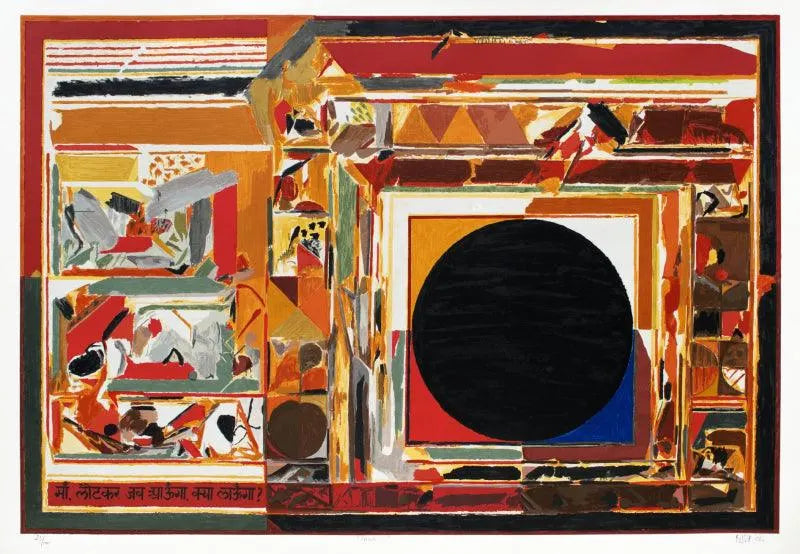
S. H. Raza is a useful historical example because his artistic development is extensively documented. He began with landscape painting, moved towards gestural abstraction in the 1960s and later explored geometric symbolism associated with the bindu. The shift was more than a change in surface appearance; it became central to the way his artistic identity is understood.
According to DAG’s artist profile of S. H. Raza, he was an early member of the Progressive Artists’ Group, received major honours and is represented in institutional collections including the National Gallery of Modern Art and the Kiran Nadar Museum of Art. These documented milestones illustrate artistic development, historical context and institutional recognition working together.
The practical lesson is not that collectors should buy Raza at any price. A painting from his early landscape phase and a later geometric composition represent different periods of his career, and they need to be assessed individually. His reputation provides context; the individual work’s importance, condition, provenance and asking price still determine whether a particular acquisition makes sense.
A Collectible Artist Does Not Mean Every Work Is Equally Desirable
Even works by a recognised artist can differ substantially in quality, historical importance and buyer interest. A major work from a defining series may be sought for reasons that do not apply to a preliminary sketch or a later work outside that series. Review the period, medium, condition, provenance, documented exhibition history and genuinely comparable works before deciding.
That distinction is particularly useful when the purchase involves several lakh rupees. Buying a famous name and buying a significant artwork are not identical decisions.
Can Emerging Indian Artists Be Collectible?
Yes. An emerging artist may already have a distinctive practice and a committed collector audience without major auctions or museum acquisitions. The limitation is evidence: professional records and resale information are usually thinner, making independent research more important. A lack of auction history is not proof of low artistic merit.
For a step-by-step approach to researching portfolio depth, exhibitions and pricing, see ArtZolo’s guide to evaluating emerging Indian artists.
Does Collectibility Guarantee Appreciation?
No. Collector preferences change, some markets are illiquid, and a future buyer may not offer the price you expect. Even an apparent gain can shrink after commissions, shipping, insurance, taxes and conservation costs. The value of a collection may also be personal or cultural rather than financial.
ArtZolo’s separate guide to investing in fine art discusses those financial risks in greater depth. This article focuses on what creates collectible interest, not on forecasting returns.
Frequently Asked Questions
Does an artist need auction records to be collectible?
No. Many emerging artists sell through galleries or directly to collectors. Auction records can help establish a secondary-market history, but their absence does not prove that an artist lacks quality or collector interest.
Are originals always more collectible than prints?
No. A unique original and an authorised editioned print have different characteristics, but significant prints can be sought after. The artist, work, edition details, provenance and collector demand all matter.
Can a famous artist still be a poor collecting choice?
Yes, at the level of an individual acquisition. Reputation does not ensure that every work is important, in good condition or reasonably priced. Evaluate the specific painting instead of relying on the signature alone.
Collect With Evidence, Not Just Recognition
An artist’s collectibility can emerge from a distinctive practice, meaningful development, credible recognition and lasting interest from collectors. The checklist near the beginning gives buyers a way to test those ideas before becoming attached to a particular painting. The strongest purchase decision considers both the artist’s career and the individual work—and remains worthwhile even without a guaranteed financial return.