ART & CULTURE
How to Evaluate Emerging Indian Artists Before Buying Their Work
How do you judge an artist you have never heard of? Learn to assess the portfolio, exhibitions, pricing and paperwork before you buy, with a Suresh Nattar case study.

A practical guide for collectors exploring original Indian art.
You discover an original painting by an Indian artist you have never heard of. The composition is distinctive, the technique interests you, and the asking price is ₹1,50,000. You like the work, but how do you assess the artist behind it?
For someone beginning to collect, the task is not to predict the next famous name. It is to evaluate artistic development, professional context, the specific artwork and its price with enough confidence to make a considered decision.
What makes an artist “emerging”?
An emerging artist is generally developing an independent professional practice and gaining recognition. Emerging does not necessarily mean young: an artist can begin exhibiting professionally later in life, while a younger artist may already have substantial recognition. There is no universal cutoff based on years, exhibitions or sales. Limited market history makes thoughtful research particularly useful.
1. Examine the artist’s body of work, not one painting
A single painting can be compelling, but a wider portfolio shows how an artist thinks and develops. Compare earlier and recent works when available. Are there recurring subjects, formal concerns or choices in colour and composition? Do changes in technique seem deliberate?
Consistency does not mean producing near-identical pictures. An artist can experiment widely while pursuing a coherent set of ideas. Look at five to ten works if possible, and ask for a portfolio or earlier exhibition material if the online selection is limited.
2. Research exhibitions and professional recognition
Exhibitions can help place an artist’s practice in context, particularly when independent galleries, curators or institutions have selected the work. A curated institutional presentation may signify a different kind of recognition from a pay-to-participate display; neither should be judged solely by the name of the venue.
Consider whether the artist has held solo or group exhibitions, whether organisers and dates can be identified, and whether there are catalogues, critical writing, residencies or awards that can be independently checked. An artist with little exhibition history may still make meaningful work; it simply means fewer external reference points are available.
3. Look for artistic development and originality
Compare the direction of the artist’s work over time. Have ideas become more developed? Is the artist testing materials or approaching familiar themes in a distinctive way? Progress need not be linear, and a change of style does not automatically signal improvement.
Influence is normal in art. The useful question is whether an artist transforms those influences into a personal approach rather than copying a fashionable visual formula. An artist statement may help, but the work itself should support the explanation.
4. Assess technique, materials and physical condition
Different styles demand different skills. A figurative work might demonstrate command of proportion and observation; abstract art may depend on subtle decisions about balance, colour, texture and rhythm. Technical polish alone is not the same thing as artistic merit.
Confirm medium, support, dimensions and year. Inspect close-up images for texture, edges and condition. For higher-value purchases, request additional photographs or a video, and ask about restoration or damage. Screen colour and scale can differ materially from seeing a painting in person.
5. Understand the artist’s pricing
Compare the asking price with other works by the same artist of similar size, medium, period and subject. Size matters, but it does not explain every price difference: a particular series, exhibition history or individual work may be significant. Equally, inconsistent pricing deserves a question.
| Question to ask | What it helps establish |
|---|---|
| How are comparable works by this artist priced? | Internal consistency of asking prices |
| Is this painting part of a specific series? | Its place within the wider practice |
| Has the work been exhibited or published? | Documented context |
| Is there evidence of actual resales? | Whether a secondary market exists |
A listed price is not the same as a proven resale value. For a fuller explanation of the variables behind art prices, see ArtZolo’s guide to why original art is expensive.
Applying the framework: Suresh Nattar as a case study
Consider the portfolio of Suresh Nattar on ArtZolo. ArtZolo’s artist biography lists a 2023 diploma in drawing and painting, exhibitions including Chitrasutra and the Jehangir Art Gallery Monsoon Show, and art competition awards. These are useful leads for research, although the exhibition and award details should be checked independently if they materially influence your purchase.
His catalogue spans abstract and figurative subjects. A collector could compare the works to ask whether there is a developing visual language rather than relying on one attractive image. Three listed original acrylic-on-canvas paintings also provide a concrete pricing exercise:
| Painting | Dimensions | Listed price |
|---|---|---|
| Untitled 8 | 12 × 18 inches | ₹22,000 |
| Untitled 9 | 24 × 24 inches | ₹42,000 |
| Untitled 10 | 30 × 40 inches | ₹67,000 |
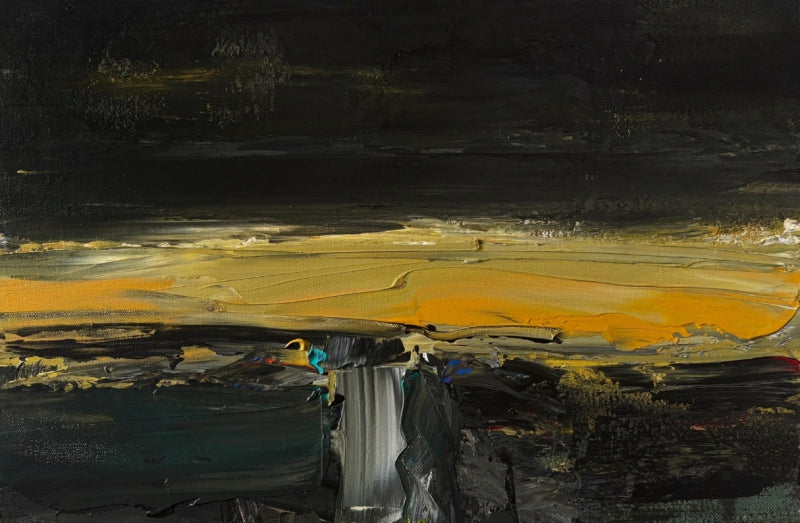
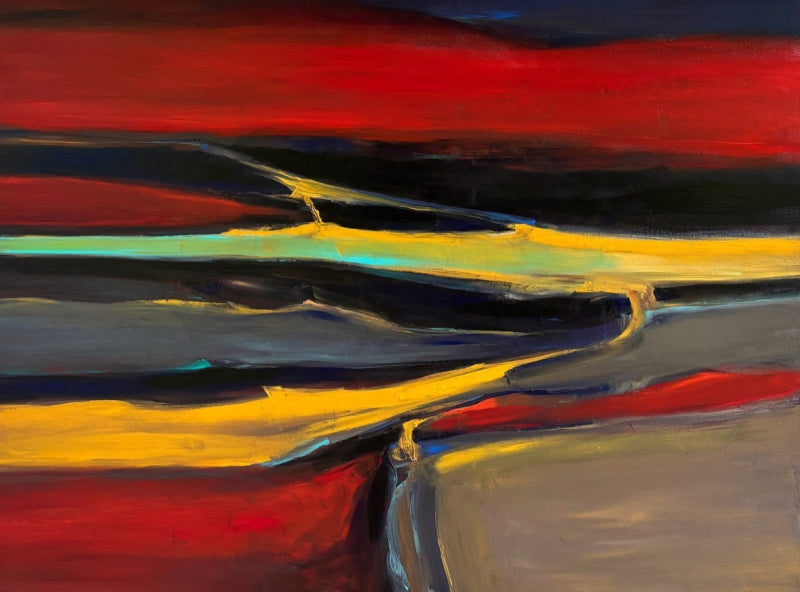
The larger works have higher listed prices, but that observation does not establish whether any one price is fair. The individual paintings, condition, pricing history and documentation still matter. The practical lesson is to move from a compelling first impression to specific, verifiable questions—not to treat a biography or price trajectory as proof of investment potential.
6. Look beyond social media popularity
Instagram and digital galleries are useful ways to discover artists, but follower counts and likes are not measures of artistic quality or sustained collector demand. Look for a substantial portfolio, independent commentary where available, and evidence of artistic development. A relatively unknown artist can be worth serious consideration; a highly visible one can still require careful scrutiny.
7. Verify authenticity and documentation
For a work acquired directly from an artist or credible seller, the ownership history may be straightforward, but record-keeping still matters. Request an invoice identifying the artist and work, its title, year, medium and size; ask for appropriate attribution documentation and any available exhibition history. A certificate of authenticity signed by the artist is a valuable record. Keep it together with the invoice and attribution details, because the documents together are what establish the work’s history.
Check that documents match the physical artwork. Retain correspondence, photographs and purchase records as part of your collection file.
A collector’s practical evaluation checklist
| Factor | What to establish |
|---|---|
| Artistic direction | Is there an identifiable practice or sustained inquiry? |
| Portfolio | Can you assess multiple works and development over time? |
| Recognition | Which exhibitions or awards are independently verifiable? |
| Craft and condition | Are technique, materials and condition understood? |
| Pricing | How does this work compare with similar works by the artist? |
| Documentation | Is attribution and origin adequately recorded? |
| Personal conviction | Would you value owning it without price appreciation? |
This is not a scoring system. A relatively new artist may have little public documentation, while another may have extensive references. Use the checklist to clarify uncertainty and decide which questions still need answers.
Should you buy an emerging artist as an investment?
Some artists gain recognition and their works later sell for more, but predicting this is difficult. Many important artistic practices never develop active secondary markets. Resale may also involve long waiting periods, commissions, shipping and other costs. Treat appreciation as uncertain rather than the foundation of your purchase.
A useful test: would you still want the painting in your collection if its resale price did not rise for ten years?
Where to discover emerging Indian artists
Visit independent exhibitions, graduate shows and art fairs, read artist statements critically, and compare work across different stages of a career. Digital platforms can widen discovery, especially when they provide transparent information about the work and artist.
To explore styles and price points, browse original Indian paintings on ArtZolo and then investigate the artists whose work holds your attention. The goal is not to find a guaranteed future star; it is to develop your own informed judgement.
Frequently asked questions
How do you identify a promising emerging artist?
Look for a developing artistic identity, a thoughtful body of work, technical understanding and credible recognition. None of these reliably predicts future fame.
Does an emerging artist need formal art education?
No. Formal study can help, but self-taught artists can also develop compelling and accomplished practices.
Are awards and exhibitions proof of quality?
They are useful signals when their context is credible, but they do not replace direct examination of the work.
Is an emerging artist a better buy than an established artist?
Neither is automatically better. Emerging artists often have less market evidence; established artists may have more documentation but can also command higher prices.
Can paintings by emerging artists appreciate?
Yes, but many do not, and there may be no reliable resale market. Do not assume that the asking price indicates future value.
How much should I spend on my first collectible artwork?
Choose a budget you can comfortably commit without depending on resale. Research the specific painting and artist before purchase.
Developing confidence as a collector
Evaluating emerging Indian artists is not an exercise in predicting which name will dominate the next auction season. It involves studying a body of work, checking professional claims, understanding the object you are buying, and assessing the price against the available evidence. A collection built with curiosity and conviction can be meaningful regardless of how the market changes.