

Realistic Landscape, Romantic Landscape, Impressionist Landscape, Abstract Landscape, Seascape, and Urban Landscape are the six major types of landscape art. Each of these styles presents the environment in a distinct way, shaped by different techniques, emotional approaches, and artistic intentions. This guide breaks down each type, along with key examples and defining characteristics, to help you clearly understand and distinguish the many forms landscape art can take.
1. Realistic Landscape

Example Painting: The Hay Wain by John Constable (1821)
Characteristics
Realistic landscape painting focuses on detailed observation of nature. Trees, mountains, skies, and water are shown as they appear in real life with accurate proportions, perspective, and lighting. There is no dramatic exaggeration. The aim is faithful visual documentation.
Technique
Artists use careful drawing and layered brushwork to create detailed textures and believable light effects.
Famous Artists
• John Constable
• Gustave Courbet
• Ivan Shishkin
• Thomas Cole
How to Recognize It
Look for lifelike detail, natural color palettes, smooth transitions, and realistic shadows forming depth.
2. Romantic Landscape

Example Painting: Wanderer above the Sea of Fog by Caspar David Friedrich (1818)
Characteristics
Romantic landscapes put mood and emotion at the center. Stormy skies, glowing sunsets, and dramatic vistas create a sense of awe. Nature feels powerful, mysterious, and larger than life.
Technique
Artists emphasize dramatic lighting, strong contrast, and sweeping compositions to evoke emotion.
Famous Artists
• Caspar David Friedrich
• J. M. W. Turner
• Thomas Cole
• Albert Bierstadt
How to Recognize It
Notice intense light contrasts, vast or dramatic scenery, and an emotional atmosphere rather than strict realism.
3. Impressionist Landscape

Example Painting: Impression, Sunrise by Claude Monet (1872)
Characteristics
Impressionist landscapes focus on light and atmosphere rather than fine detail. Short, visible brushstrokes capture the way light reflects and moves at a particular moment in time.
Technique
Loose brushwork and bright, often unmixed colors are used to suggest form and light instead of defining precise details.
Famous Artists
• Claude Monet
• Camille Pissarro
• Alfred Sisley
• Pierre Auguste Renoir
How to Recognize It
Look for soft edges, shimmering light, and a sense of movement. Colors often reflect changing light rather than exact local tones.
4. Abstract Landscape
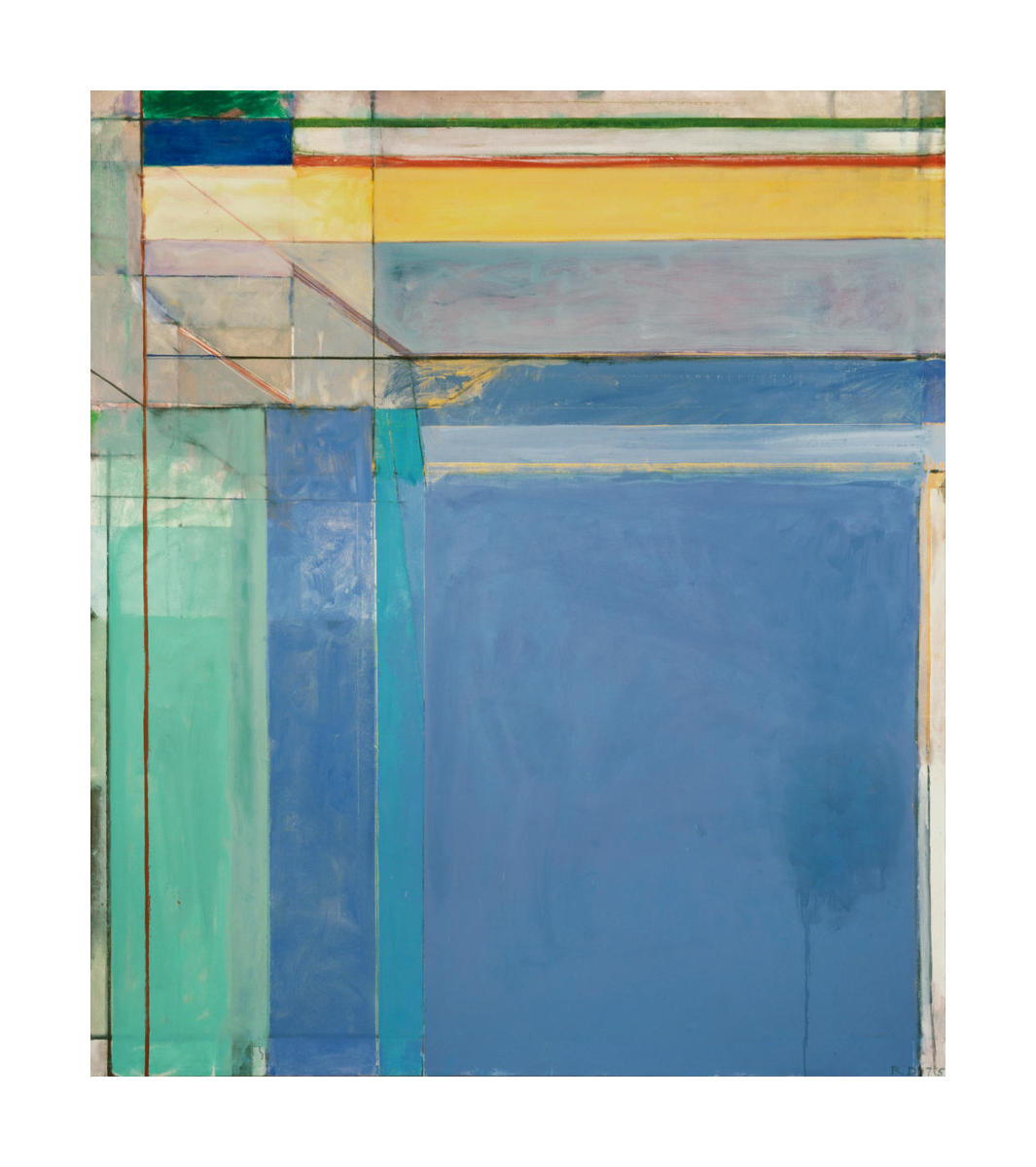
Example Painting: Ocean Park No. 79 by Richard Diebenkorn (1970)
Characteristics
Abstract landscapes take natural elements and simplify or transform them into shapes, lines, and colors that do not necessarily resemble what is seen in nature. Form and mood become central over literal depiction.
Technique
The scene is often reduced to expressive shapes, color fields, or compositional rhythms.
Famous Artists
• Richard Diebenkorn
• Wassily Kandinsky
• Georgia O Keeffe
• Paul Klee
How to Recognize It
Look for landscapes suggested through colors and forms instead of clear representational detail.
5. Seascape
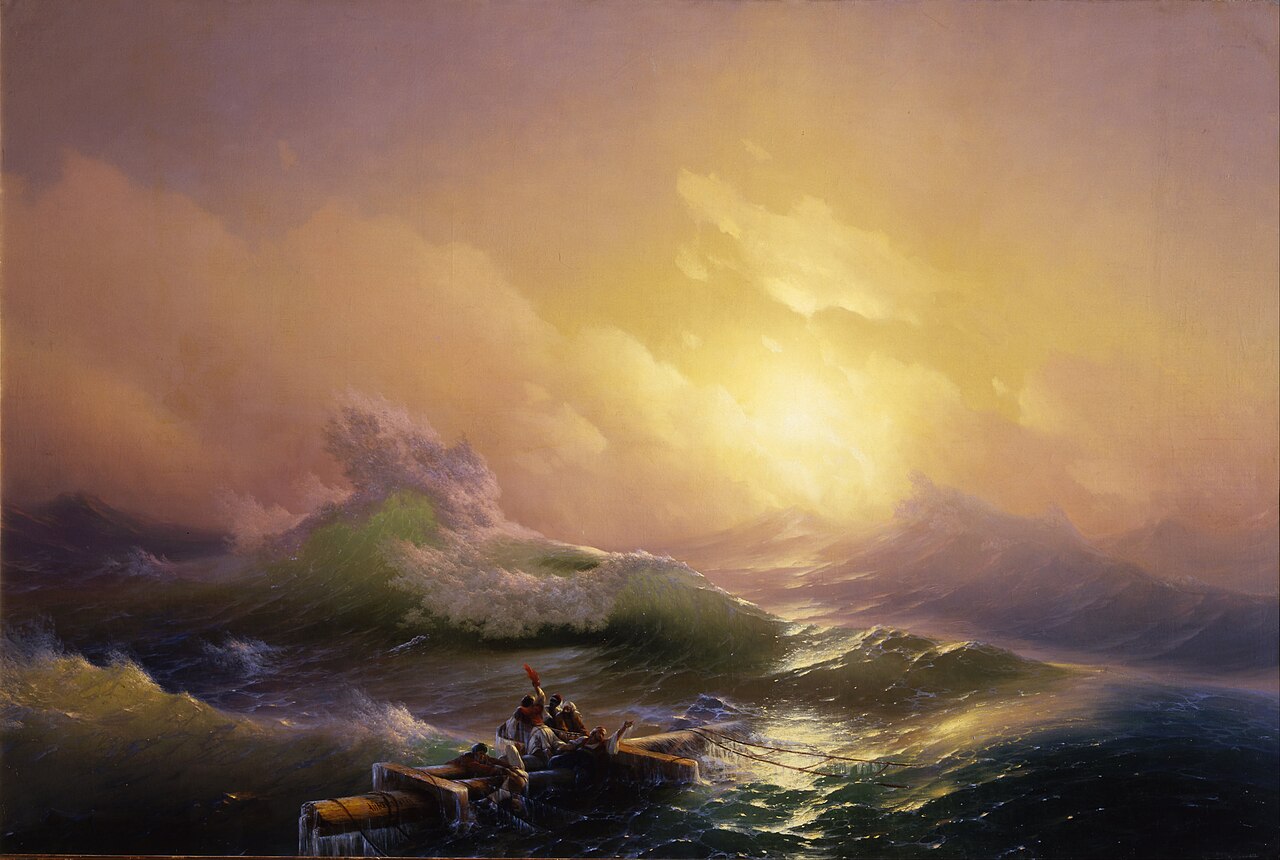
Example Painting: The Ninth Wave by Ivan Aivazovsky (1850)
Characteristics
Seascapes focus on water environments such as oceans, seas, rivers, and coastlines. These works often highlight the interaction between water and sky.
Technique
Artists capture water movement and reflections through brushwork that conveys fluidity and depth.
Famous Artists
• Ivan Aivazovsky
• J. M. W. Turner
• Winslow Homer
• Claude Monet
How to Recognize It
Look for dominant water surfaces with horizon lines, waves, or reflections.
6. Urban Landscape
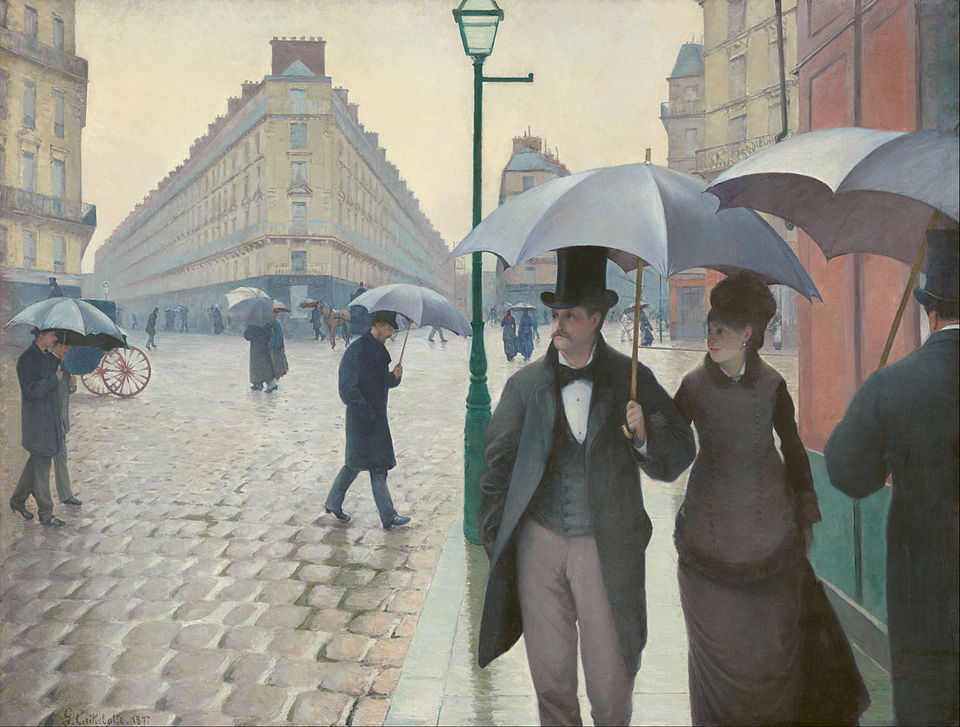
Example Painting: Paris Street; Rainy Day by Gustave Caillebotte (1877)
Characteristics
Urban landscapes depict cityscapes, streets, architecture, and built environments. Nature may be present, but the focus is on human made space.
Technique
Precise perspective and geometric structure highlight architectural forms.
Famous Artists
• Gustave Caillebotte
• Edward Hopper
• Canaletto
• Camille Pissarro
How to Recognize It
Notice buildings, roads, and structures filling most of the visual space rather than natural scenery.
How to Tell These Types of Landscape Paintings Apart
When studying different types of landscapes in art, look beyond what the painting shows and focus on how it presents the scene. Three major elements can help you clearly distinguish between these kinds of landscape painting.
|
Element to Analyze |
What to Look For |
How It Differentiates the Types of Landscape Art |
|
1. Subject Matter |
Identify the environment and how it is portrayed. Is it purely natural, emotionally dramatic, simplified into shapes, centered on water, or dominated by architecture? |
Realistic landscapes present nature in a balanced, observational way. Romantic landscapes make nature feel powerful and emotionally intense. Impressionist landscapes capture a fleeting moment of light in nature. Abstract landscapes simplify or transform scenery into shapes and color relationships. Seascapes center primarily on water. Urban landscapes focus on built environments such as streets and buildings. |
|
2. Use of Light and Color |
Observe whether colors are natural, dramatic, atmospheric, or symbolic. Notice how shadows and highlights are handled. |
Natural colors and believable shadows suggest Realism. Dramatic lighting and emotional intensity point to Romanticism. Temporary, shifting light effects indicate Impressionism. Expressive or symbolic color choices often signal Abstract landscape art. |
|
3. Level of Detail and Technique |
Examine how much detail is included and how the paint is applied. Are forms carefully rendered or intentionally simplified? |
Realistic landscapes show refined detail and smooth rendering. Impressionist works reduce detail and use visible brushstrokes. Abstract landscapes dramatically simplify forms. Urban landscapes emphasize structured lines and architectural precision. The more stylized and simplified the forms, the further the painting moves away from realism. |
Conclusion
The six primary types of landscape art provide a clear framework for understanding how artists interpret environment and space. Realistic landscapes aim for accuracy. Romantic landscapes heighten emotion. Impressionist landscapes capture light and atmosphere. Abstract landscapes transform nature into expressive forms. Seascapes explore the relationship between water and sky. Urban landscapes focus on human made surroundings.
By studying subject matter, light, and detail together, you can confidently identify different types of landscape paintings and appreciate the artistic decisions behind them. Landscape art continues to evolve, but these foundational categories remain essential for understanding how artists represent the world around us.


