

Expressionist painting is a modern art movement that prioritises emotional intensity over realistic representation. Instead of depicting the world as it appears, Expressionist artists distort form, exaggerate colour, and manipulate composition to communicate psychological tension and subjective experience.
This article outlines the origins of Expressionism, its defining characteristics and techniques, notable artists and artworks, its influence in India, and its continuing relevance today.
When and Where Did Expressionism Begin?
Expressionism began in the early twentieth century, primarily in Germany, during a time of profound political, social, and industrial change. Rapid urbanisation, technological advancement, and shifting social structures created feelings of instability and anxiety, which many artists sought to express visually.
The movement formally emerged through two influential artist groups:
-
Die Brücke, founded in Dresden in 1905, aimed to break away from academic traditions and create a new artistic language rooted in emotional honesty and raw expression.
-
Der Blaue Reiter, formed in Munich in 1911, focused more on spirituality, symbolism, and the emotional power of colour and abstraction.
Rather than documenting modern life realistically, these artists responded to it psychologically. Their work reflected tension, alienation, spiritual questioning, and a desire to challenge established cultural norms.
Expressionism soon spread beyond Germany, influencing artists across Europe and contributing significantly to later movements such as abstraction and modern painting worldwide.
Main Features of Expressionist Art
Expressionist painting has several defining characteristics:
1. Distortion of Form
Figures and landscapes are exaggerated or simplified to heighten emotional impact.
2. Intense and Non Natural Colour
Artists use bold or symbolic colours rather than realistic tones.
3. Expressive Brushwork
Visible strokes and thick paint create movement and emotional force.
4. Psychological Themes
Subjects often reflect isolation, anxiety, conflict, or inner struggle.
5. Rejection of Academic Rules
Perspective, anatomy, and proportion are altered to serve expression.
Expressionism Techniques
Expressionism techniques prioritise emotional communication over technical precision. Common approaches include:
-
Impasto, where paint is applied thickly to create texture and intensity
-
Angular or fragmented lines to heighten tension and psychological strain
-
High contrast colour combinations to amplify emotional impact
-
Symbolic use of colour to suggest mood rather than realism
-
Simplified or distorted backgrounds to focus attention on emotional content
These expressionism painting techniques allow artists to emphasise feeling and subjective experience rather than visual accuracy.
Expressionism vs Impressionism vs Realism
|
Aspect |
Realism |
Impressionism |
Expressionism |
|
Primary Aim |
Represent subjects accurately and objectively |
Capture light and fleeting visual impressions |
Convey internal emotion and subjective experience |
|
Approach to Reality |
Faithful depiction of everyday life |
Focus on perception and atmosphere |
Distortion of reality to express feeling |
|
Use of Colour |
Natural and true to life |
Light based, broken colour |
Bold, exaggerated, symbolic |
|
Brushwork |
Controlled and precise |
Loose and visible |
Energetic and emotionally charged |
|
Truth Sought |
Truth through observation |
Truth through perception |
Truth through experience |
Famous Expressionist Artists
Key figures in Expressionism include:
1. Edvard Munch
2. Ernst Ludwig Kirchner
3. Wassily Kandinsky
4. Franz Marc
5. Egon Schiele
These artists shaped the emotional and visual language of early twentieth century painting.
Most Famous Expressionist Paintings
1. The Scream by Edvard Munch

A visual representation of existential anxiety using swirling lines and dramatic colour.
2. Street, Berlin by Ernst Ludwig Kirchner

Depicts urban alienation through angular forms and vivid contrasts.
3. Blue Horse I by Franz Marc

Uses bold colour and simplified structure to convey spiritual symbolism.
4. Composition VII by Wassily Kandinsky

An emotionally dynamic composition that moves toward abstraction.
5. Self Portrait with Physalis by Egon Schiele
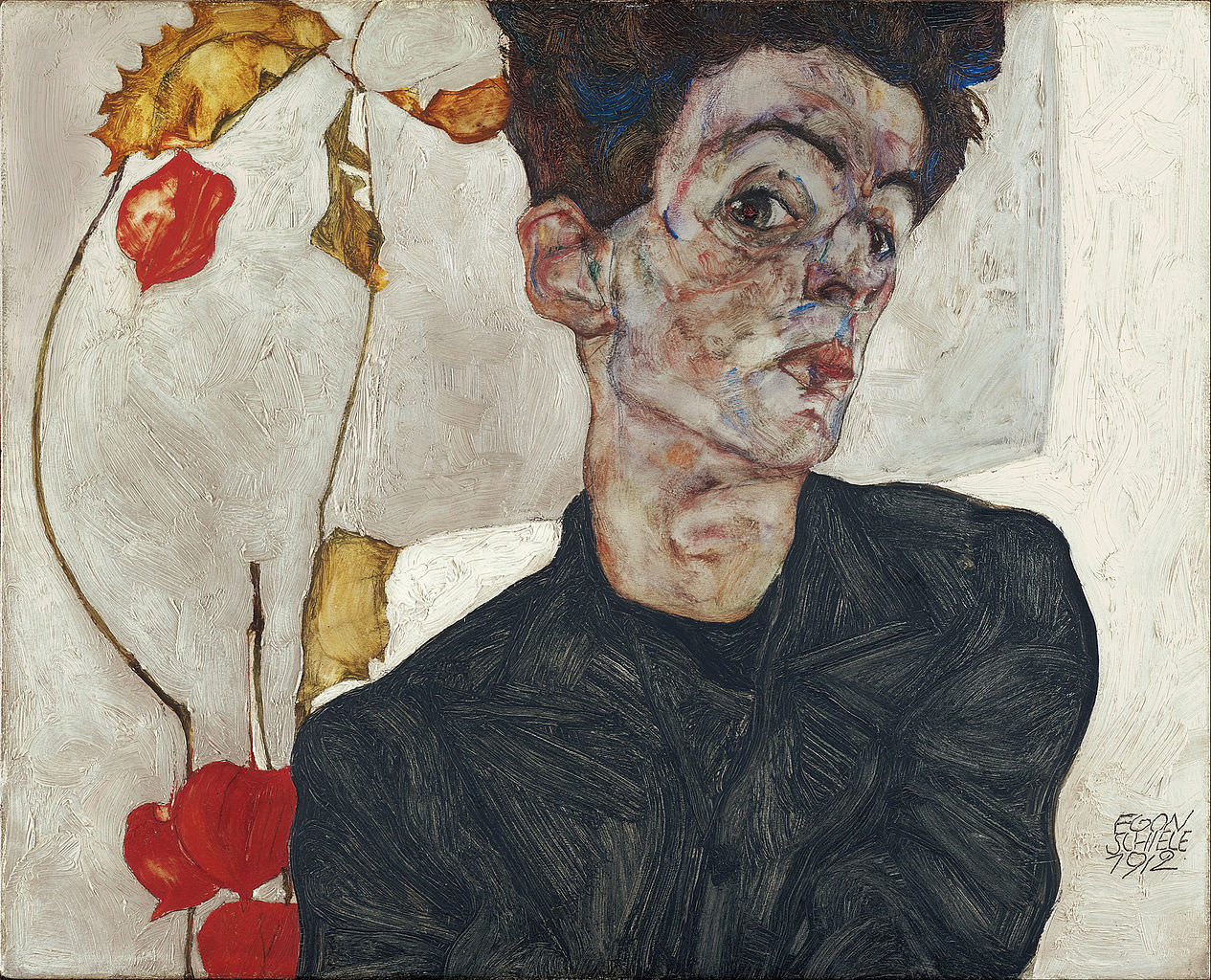
Distorted anatomy and raw line work express vulnerability and tension.
Impact of Expressionist Painting in India
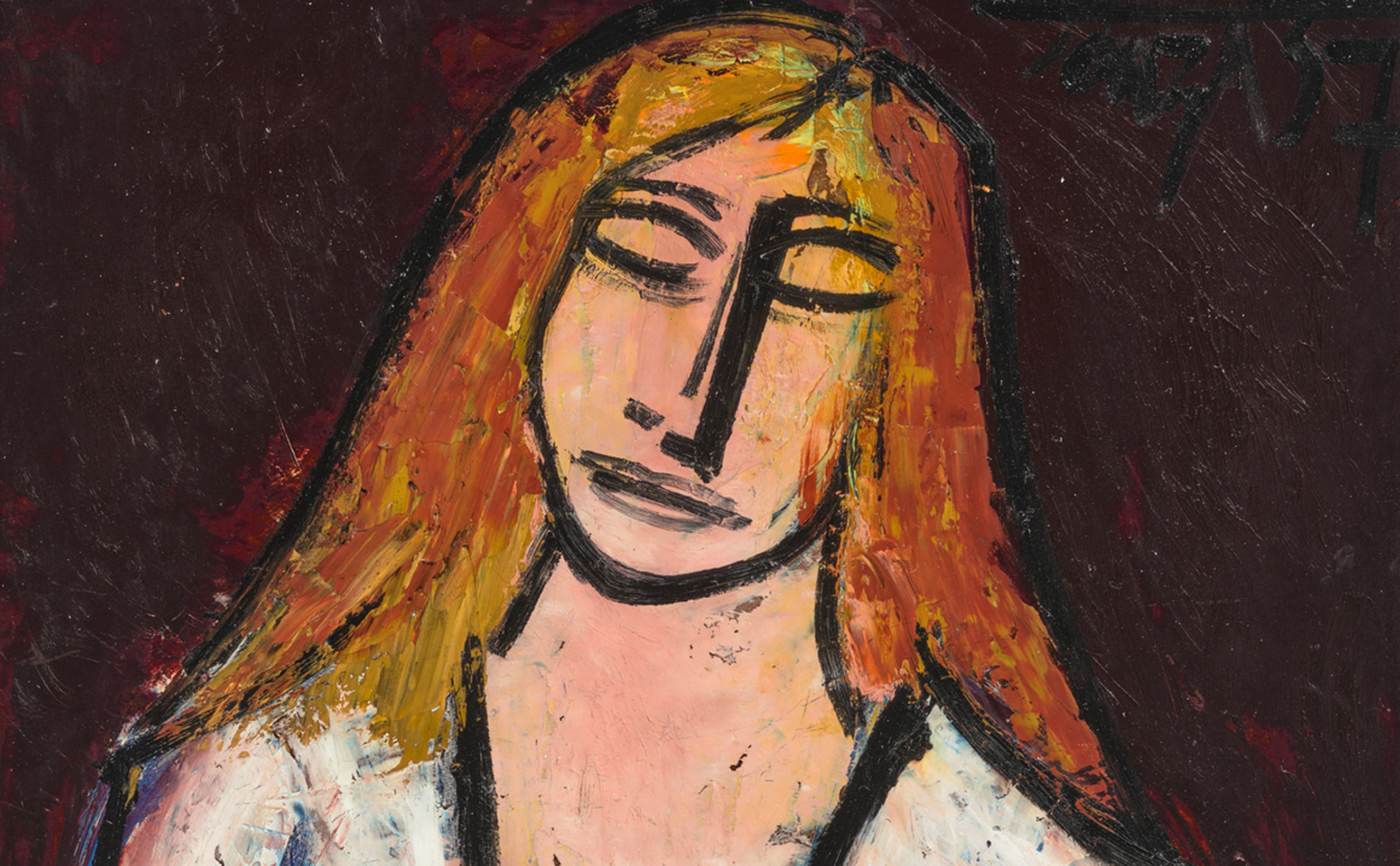
Expressionist painting played an important role in shaping modern Indian art after independence. As Indian artists engaged with international modernism, many adopted emotional intensity, distortion of form, and symbolic colour while grounding their work in local realities.
Expressionism offered a way to move beyond both colonial academic realism and decorative revivalism. It enabled artists to address identity, urban change, political transition, and psychological tension through expressive visual language rather than literal depiction.
The Progressive Artists’ Group, formed in Bombay in 1947, was central to this shift. F. N. Souza used harsh line work and distorted figures to critique religious and social structures. His painting Birth demonstrates this approach through exaggerated anatomy and unsettling expression. Tyeb Mehta simplified the human figure into sharp, angular planes, conveying isolation and existential strain in works such as Falling Figure. Ram Kumar’s Banaras series moved toward abstraction while retaining emotional depth through restrained colour and structural composition.
Expressionism in India was not a direct imitation of European models. Instead, it merged emotional force with Indian themes, mythology, and post-independence realities. This synthesis helped establish a distinctly modern Indian visual language rooted in both inner experience and cultural context.
Abstract Expressionism and Later Developments

In the mid twentieth century, Expressionism influenced Abstract Expressionism, particularly in the United States.
Artists such as Jackson Pollock and Mark Rothko expanded emotional intensity through gesture, scale, and colour fields. While subjects became non representational, the emphasis on emotional depth remained central.
Both movements share a commitment to personal expression and psychological intensity.
Importance of Expressionist Painting Today
Expressionist painting transformed how emotion could be represented visually. It expanded artistic freedom and challenged the dominance of realism.
The movement influenced cinema, theatre, literature, and later modern art forms. Its emphasis on subjective experience continues to shape contemporary practice.
Expressionism remains significant because it demonstrates that art can communicate internal truth as powerfully as external observation.


