

Art trends in 2026 are moving in a direction that feels like a collective exhale. The visual culture of the last few years has been intense, highly produced aesthetics, constant content churn, and work that can feel more finished than felt. The emerging fine art trends for 2026 suggest a shift toward pieces that carry more evidence of process and personality, texture that shows the hand, symbolism that carries emotion, and styles that balance nostalgia with innovation.
One line that matters in any honest trend conversation: these are trends and a possibility, not a 100% guarantee. Art does not follow a single path, and different scenes move at different speeds. But when multiple signals align across colour forecasting, online attention patterns, and what artists are experimenting with, certain directions become easier to study.
Cloud Dancer and the return of quiet space
A defining influence on the 2026 visual mood is Pantone’s Color of the Year: PANTONE 11-4201 Cloud Dancer. It is a creamy off-white associated with clarity, new beginnings, and a fresh canvas feeling. In practice, this pushes a larger creative preference toward restraint. Less visual noise. More intentional emptiness. More attention to what happens when you remove excess.
In artworks, Cloud Dancer energy often appears through negative space, soft tonal fields, and compositions that let the viewer breathe. It is not an instruction to make everything minimal. It is a reminder that space can carry emotion. It also changes how other elements land. When the ground is calm and airy, texture becomes more noticeable, metallic details look more deliberate, and bold colours read as statements rather than clutter.
Examples and references: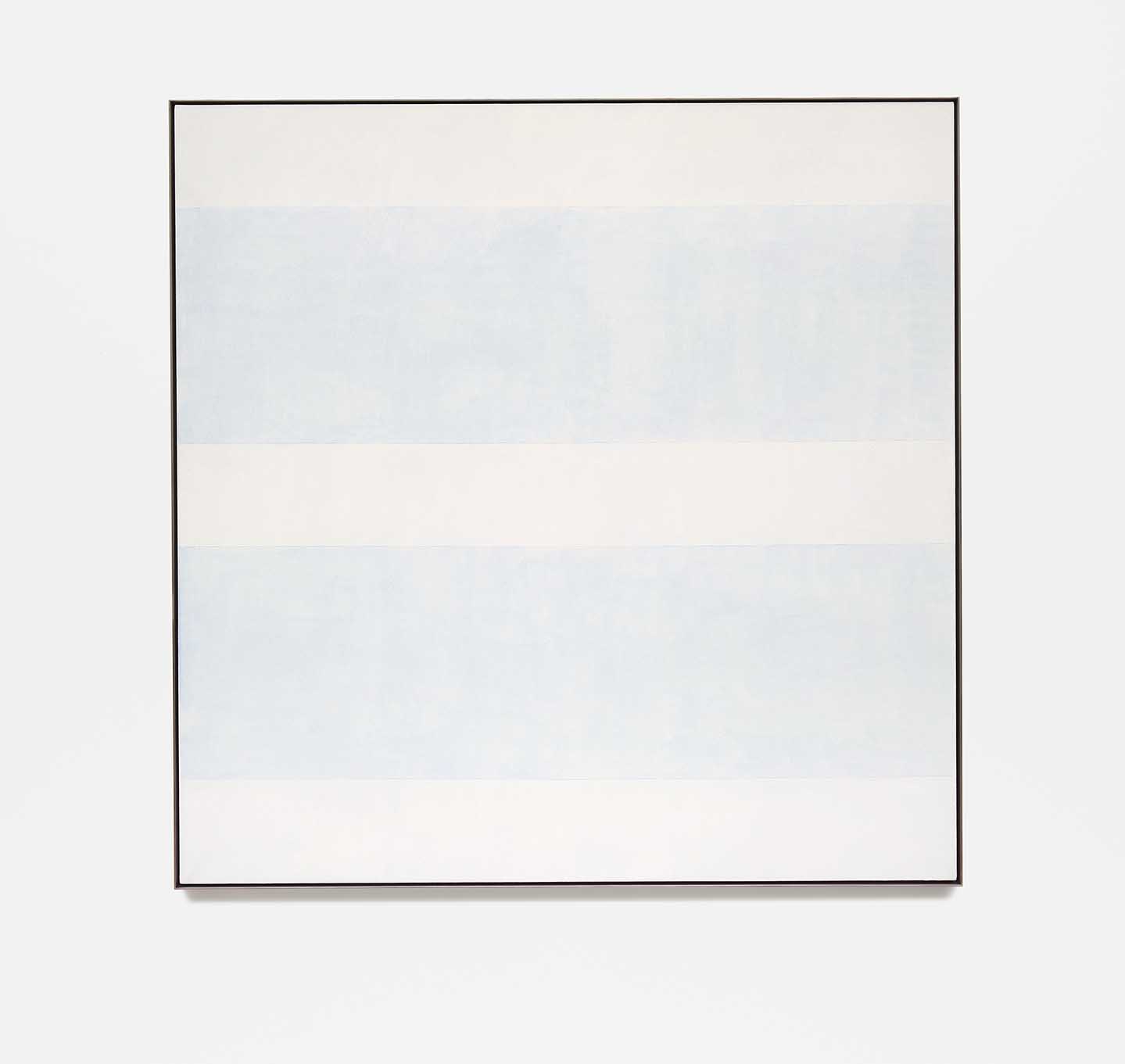
Painting by: Agnes Martin
Agnes Martin is a strong reference point for quiet space and emotional restraint through subtle grids and pale tonal fields. Robert Ryman’s white paintings show how “off-white” can become a full subject through surface and light. Mark Rothko, especially later works, shows how large colour fields can hold stillness and weight without busy detail.
Nature-first work and symbolic botanicals
Nature-focused art is continuing to evolve, but in 2026 it is less about literal realism and more about using nature as a language. Organic forms, botanical references, and earth-derived palettes show up because they express stability and renewal, ideas people keep reaching for in uncertain times. This direction overlaps with the wider biophilic movement, but in fine art it often becomes more symbolic than decorative.
Symbolic botanicals are a strong part of this wave. Flowers, vines, butterflies, seeds, and natural cycles are used as meaning carriers: transformation, memory, resilience, intimacy, grief, softness, rebirth. The same motifs can be treated in very different ways, quiet and sparse, or dense and dramatic, which is why this trend holds across multiple aesthetics rather than belonging to one narrow look.
Examples and references:
Painting by: Georgia O’Keeffe: Anthurium
Georgia O’Keeffe is a clear precedent for botanical imagery that becomes psychological and symbolic rather than simply descriptive. Hilma af Klint used floral and organic forms as spiritual codes, making nature feel like a system of meaning. Damien Hirst’s butterfly works are a direct example of transformation as both image and concept.
Sustainability and eco-conscious art practices
Sustainability in 2026 is shaping up as a serious creative direction, not a branding add-on. Eco-conscious making, reused materials, up-cycled supports, reclaimed paper, natural dyes, found objects, and low-impact processes, is gaining attention because it adds both ethical intention and creative depth. It gives the artwork a material story, not just a visual one.
What is interesting is how sustainability changes the aesthetic of art. Reused surfaces introduce texture and irregularity that cannot be perfectly replicated. Natural pigments and dyes can create softer tonal variation. Found materials add embedded history. These qualities align with the larger 2026 preference for honesty over polish. Sustainable practices also encourage experimentation. When artists work with what is available, scraps, leftovers, objects with prior lives, it often leads to new composition methods and unexpected forms.
Examples and references:
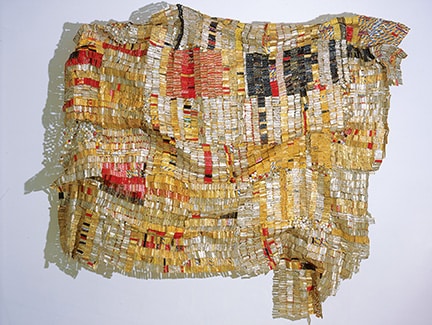
El Anatsui’s piece Old Man’s Cloth
El Anatsui’s large-scale works made from bottle caps show how reclaimed materials can create richness, movement, and cultural weight. Agnes Denes, especially with Wheatfield, is an essential reference for ecological thinking as art practice. Vik Muniz, known for image-making using unconventional materials, shows how reuse can be central to both concept and visual impact.
Mixed media and sensory-rich art returns strongly
Mixed media is not new, but in 2026 it is becoming one of the most visible approaches shaping current work. Artists are combining paint with fabric, paper, found objects, and digital layers, not to chase novelty, but to build surfaces that feel physical and alive. This matters because the 2026 shift favors pieces that reward close looking. Layering, seams, edges, overlaps, and surface variation become part of the content.
Examples and references: 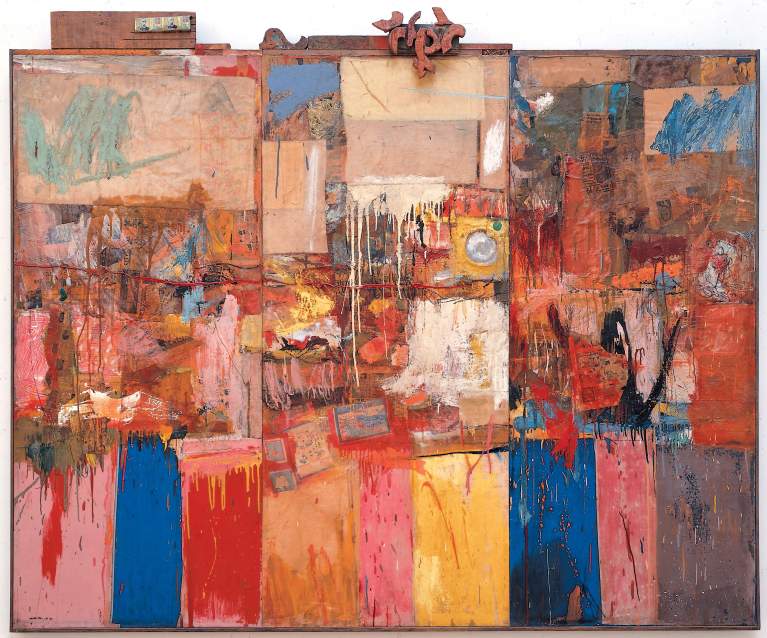
Painting by: Robert Rauschenberg’s
Robert Rauschenberg’s Combines remain a foundational reference for mixing painting with everyday materials. Faith Ringgold’s story quilts show how fabric, paint, and narrative can merge into a single language. Louise Nevelson’s assemblages show how collected wood and shadow can become a unified, immersive surface.
Texture-first art and the rise of handcrafted surfaces
Texture is becoming one of the strongest visual signals of 2026. Not texture for decoration, but texture as proof of time and touch. This is where textured minimalism becomes important. Minimal layouts, arches, blocks, curves, open fields, are paired with relief, plaster-like finishes, thick paint ridges, layered gesso, torn edges, stitched marks, or matte and gloss contrast. The composition stays restrained, but the surface carries the emotion.
Cloud Dancer works as a strong foundation for this because creamy off-white grounds make texture more visible. When colour is quieter, the viewer notices shadow, grain, and surface shifts. That is why 2026 minimal work often does not feel empty. It feels intentional, material, and considered.
Examples and references:

Painting by: Antoni Tapies – Waves and Arm
Antoni Tàpies is a key reference for material-heavy surfaces that feel like walls, scars, and weathered memory. Alberto Burri’s work with burlap and burned materials shows how damage and texture can become form. Lee Ufan’s restrained mark-making and emphasis on material presence connects strongly to minimal composition with physical depth.
Neo-Deco revival and modern glamour
Neo-Deco returns in 2026 as a modern reinterpretation rather than a historical replica. You will see geometry, symmetry, repeated curves, and structured compositions, but often softened and updated through tactile detail and warmer metals. Instead of sharp, cold luxury, the direction leans toward grounded richness, chrome and brass cues, copper and bronze warmth, and jewel tones used with control.
This trend fits 2026 because it balances discipline and drama. It offers structure in a time when many aesthetics feel messy, while still allowing personality through texture, colour, and symbolic details.
Examples and references:
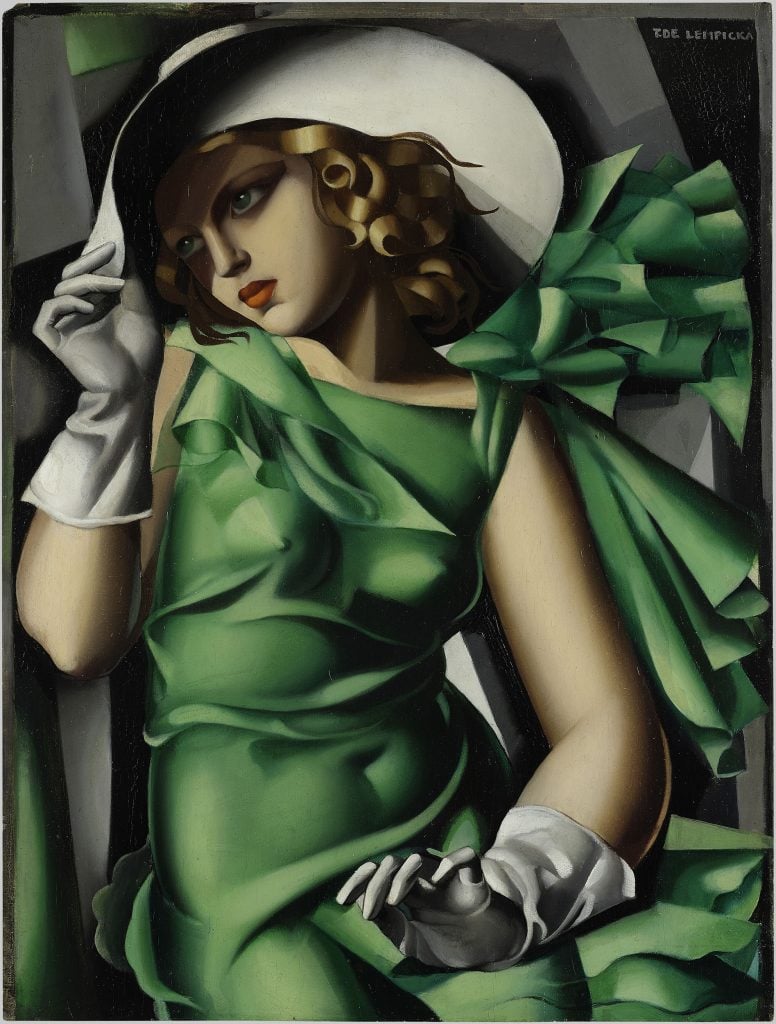
Painting by: Tamara de Lempicka, Young Woman in Green
Tamara de Lempicka is a direct Art Deco reference for sleek geometry, stylized glamour, and bold structure. Erté’s graphic elegance and theatrical line work show Deco’s relationship with design and performance. Sonia Delaunay’s geometric rhythm and colour relationships also serve as an important reference for structured abstraction with energy.
Opera aesthetic, Neo Romanticism, and Baroque-coded drama
While calm and restraint are rising, so is a form of drama that feels emotional rather than flashy. Opera aesthetic work, Neo Romanticism, and Baroque or medieval revival cues bring theatrical composition, deep shadows, jewel tones, and symbolic storytelling into the foreground. These works can feel intimate even when they are visually grand, because the aim is mood, longing, devotion, mystery, intensity, rather than spectacle alone.
This lane often intersects with figurative work, because the human subject is a powerful carrier of drama. It can also intersect with symbolic botanicals, where florals become lush, dark, and narrative-driven.
Examples and references:
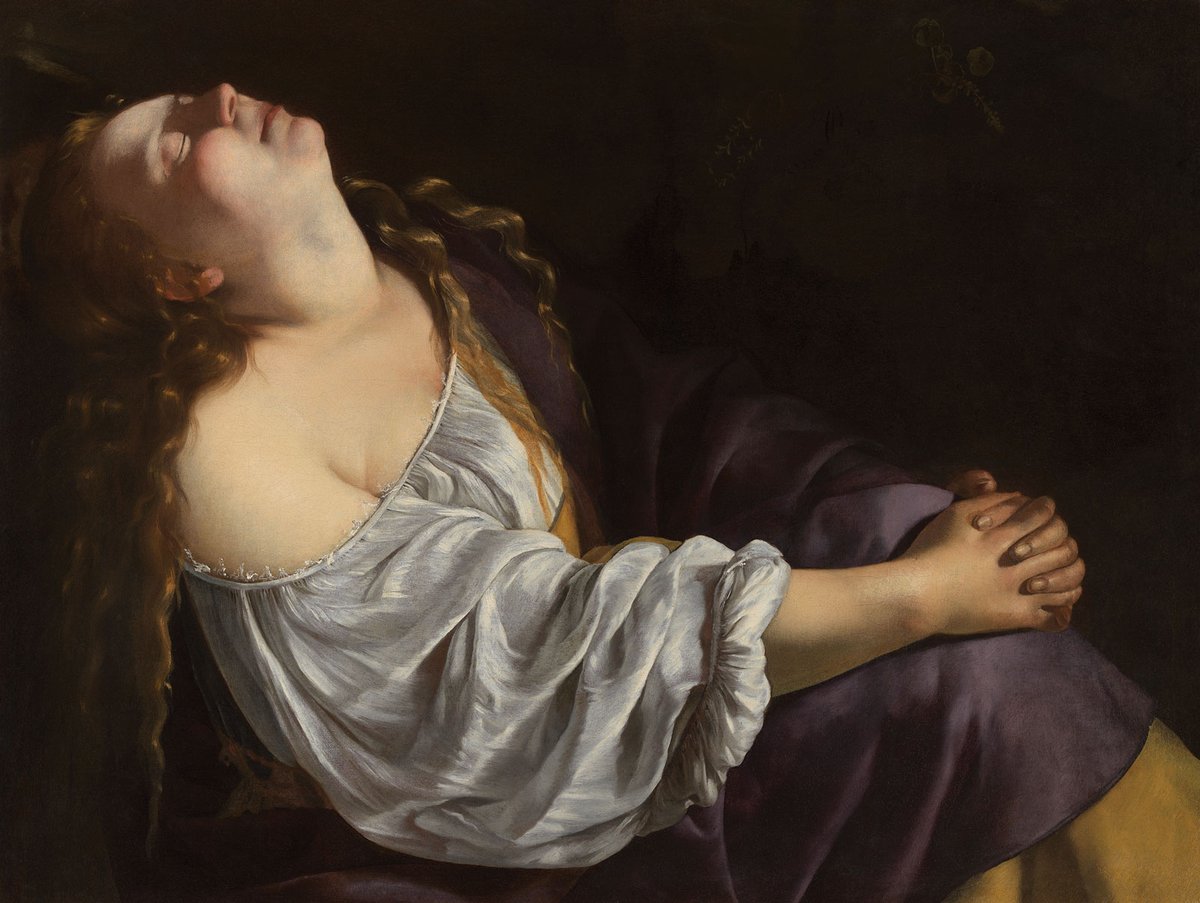
Painting by: Artemisia Gentileschi's Mary Magdalene in Ecstasy
Caravaggio’s chiaroscuro is an enduring reference for theatrical light, tension, and emotional focus. Artemisia Gentileschi is a reference for intensity, narrative force, and dramatic composition. Caspar David Friedrich is a key reference point for Romantic mood, solitude, and spiritual atmosphere.
Figurative and humanistic art: connection over perfection
Figurative work in 2026 leans toward vulnerability and presence. Instead of glossy idealization, there is more interest in quiet realism, expressive realism, and narrative portraiture that emphasizes identity, mood, and atmosphere. This is art that aims to feel emotionally true, even when the technique ranges from detailed realism to abstract realism.
Cloud Dancer’s influence shows up here through background restraint. When compositions give the subject room, the figure can feel more intense. Silence around a face, a gesture, or a scene can carry as much meaning as detail.
Examples and references:
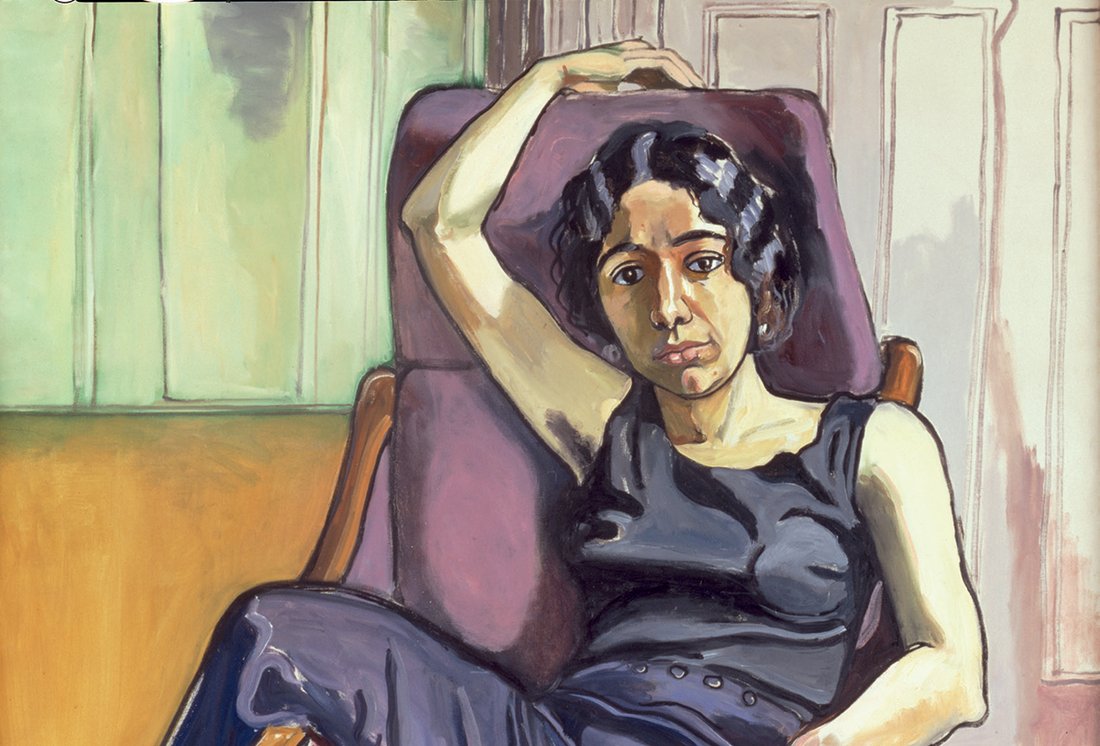
Painting by: Alice Neel, 'Marxist Girl'
Alice Neel is a strong reference for portraits that prioritize psychological truth over polish. Lucian Freud is a reference for uncompromising human presence and the honesty of flesh and time. Egon Schiele is a reference for expressive line, vulnerability, and emotional rawness in figurative form.
Memorycore and nostalgia as personal archive
Nostalgia in 2026 is more personal than performative. Memorycore aesthetics, scrapbook layering, collage logic, handwriting cues, childlike marks, paper textures, and intimate symbols, reflect a desire to hold onto meaning and time. This trend is not simply retro. It is about memory fragments and emotional storytelling.
It also overlaps naturally with sustainability and mixed media. Reused paper, reclaimed materials, and layered processes support the archive-like feeling. The result often reads as honest and intimate, because the work feels like it comes from lived experience rather than trend-chasing.
Examples and references:

Joseph Cornell’s boxed assemblages are a classic precedent for memory, ephemera, and intimate archival worlds. Kurt Schwitters is a key reference for collage as personal record and material poetry. Christian Boltanski is a reference for memory, identity, and the emotional weight of archival fragments.
Digital meets physical: hybrid creation with human finish
Technology continues shaping art in 2026, but the stronger direction is hybrid. Digital tools are used for composition, colour study, planning, or layering, then translated into physical surfaces so the result still feels human. Glitch-inspired aesthetics can appear, but often softened through material texture and hand finishing. AI-assisted workflows may play a role, but the work that resonates tends to make authorship and intention feel clear through visible choices.
This is one of the most important new art forms directions: not digital versus physical, but digital plus physical, logic plus intuition, structure plus texture.
Examples and references:
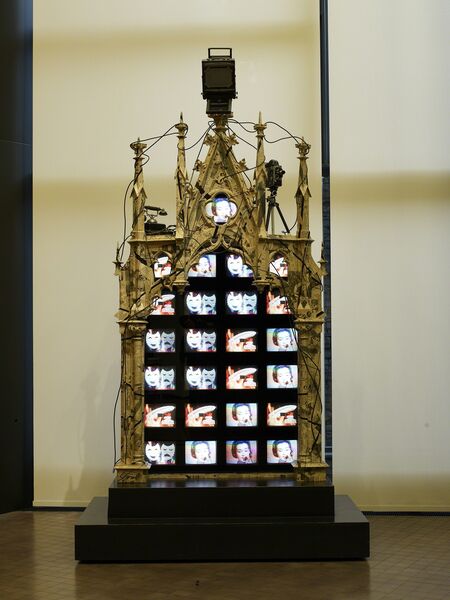
Art by: Nam June Paik
Nam June Paik is a foundational reference for video and electronic media as art language. Jenny Holzer shows how digital systems, text, and public display formats can become emotional and conceptual art. Rafael Lozano-Hemmer is a reference for interactive and tech-driven work that still centers human presence and participation.
The colour and material logic of 2026
Rather than one dominant palette, 2026 leans into contrast and balance. Cloud Dancer sets a quiet base, then artists often choose one accent family to define the emotional register: earthy tones for grounding, jewel tones for drama, warm metallics for depth, cosmic blues and purples for atmosphere, or sharper brights used sparingly for impact. Material choices, paper, fabric, relief mediums, patina finishes, layered surfaces, carry as much meaning as colour.
A simple way to summarize the year’s visual logic is: quiet foundation, strong surface, clear intention.
Examples and references:
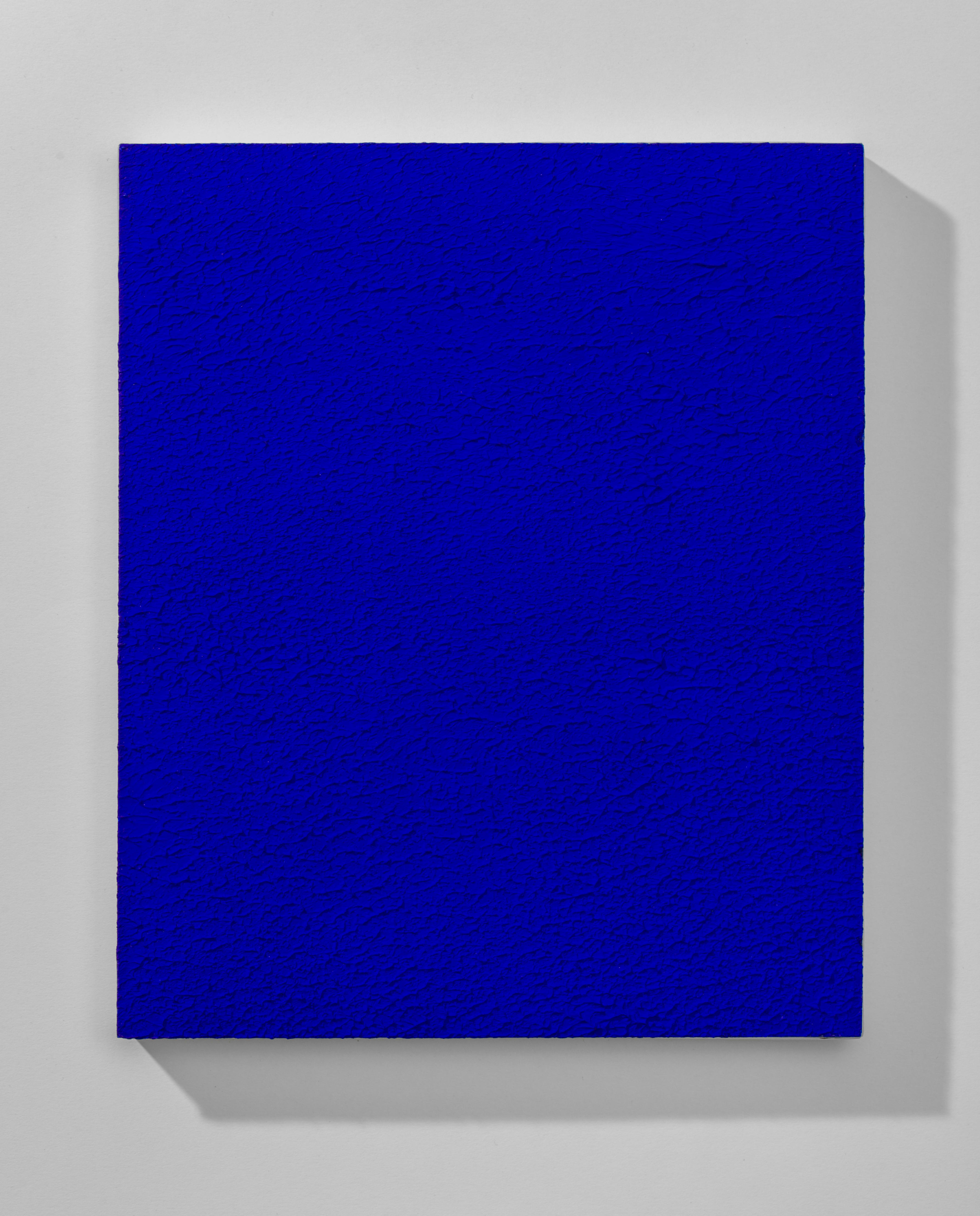
Painting by: Yves Klein
Yves Klein is a reference for the emotional force of a single colour family used with conviction. Mark Rothko is a reference for mood-driven colour fields where tone becomes feeling. Anish Kapoor is a reference for how pigment, void-like colour, and surface absorption can create psychological space.
Closing: what 2026 rewards
Across all these directions, the strongest common thread is authenticity. 2026 rewards art that feels made, not manufactured, felt, not overproduced. Whether the work leans calm or dramatic, nature-coded or tech-coded, minimal or layered, the throughline is the same: material presence, emotional clarity, and personal voice.
And one last reminder worth keeping in the post itself: these are trends and a possibility, not a 100% guarantee. The most lasting work will still be the work that carries something real.


